



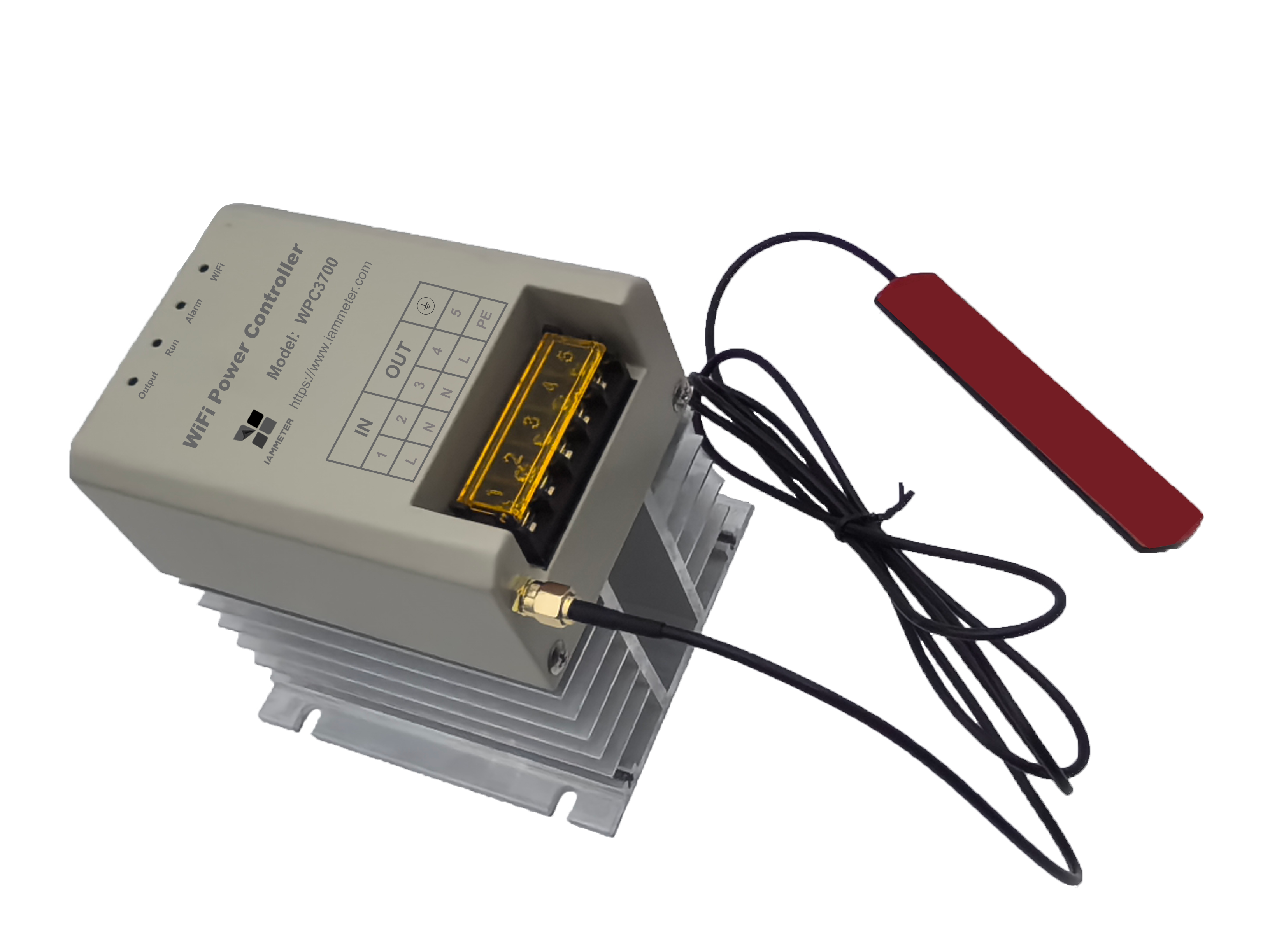
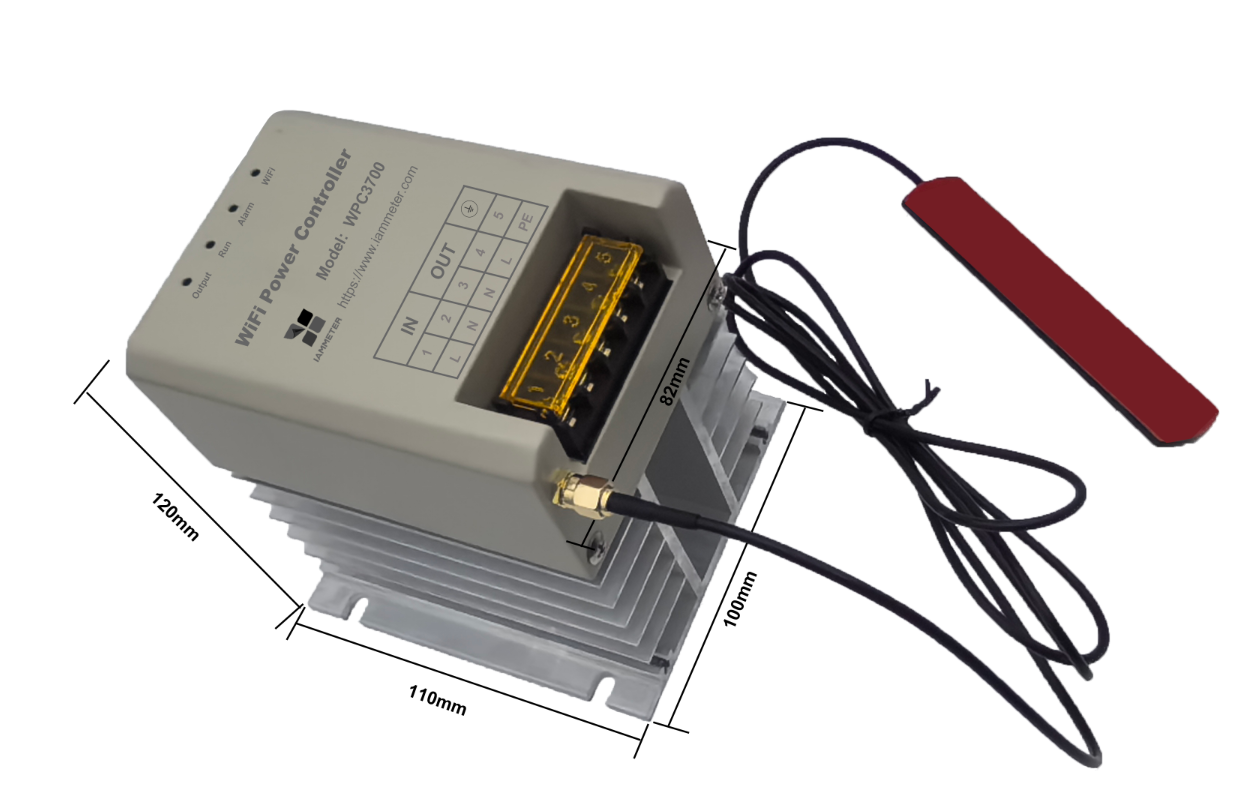
The WPC3700 is a single-phase Wi-Fi power controller that can linearly adjust the output power of resistive loads, such as electric boilers, immersion heaters, and water heaters.
For home solar PV users, its main value is simple: use more solar surplus inside the home and buy less electricity from the grid.
When WPC3700 works together with an IAMMETER energy meter, it can adjust heater power according to real-time grid import/export data. If the solar PV system has surplus power, WPC3700 increases the load power. If the home starts importing from the grid, WPC3700 reduces the load power.
Many solar PV users export surplus energy to the grid during the day and then buy electricity back later at a higher price.
If the feed-in tariff is low, exporting solar energy may be less valuable than using it directly at home.
WPC3700 helps increase solar self-consumption by moving flexible heating loads into the solar surplus window.
Typical goals include:
Related solar monitoring pages:
The recommended setup is:
For example, if the grid threshold is set to 0 W, the controller tries to keep the boiler running only with solar surplus. When there is more export power, it increases the heater power. When export power decreases or grid import appears, it reduces the heater power.
This allows a boiler or water heater to absorb surplus PV energy more smoothly than a simple on/off relay.
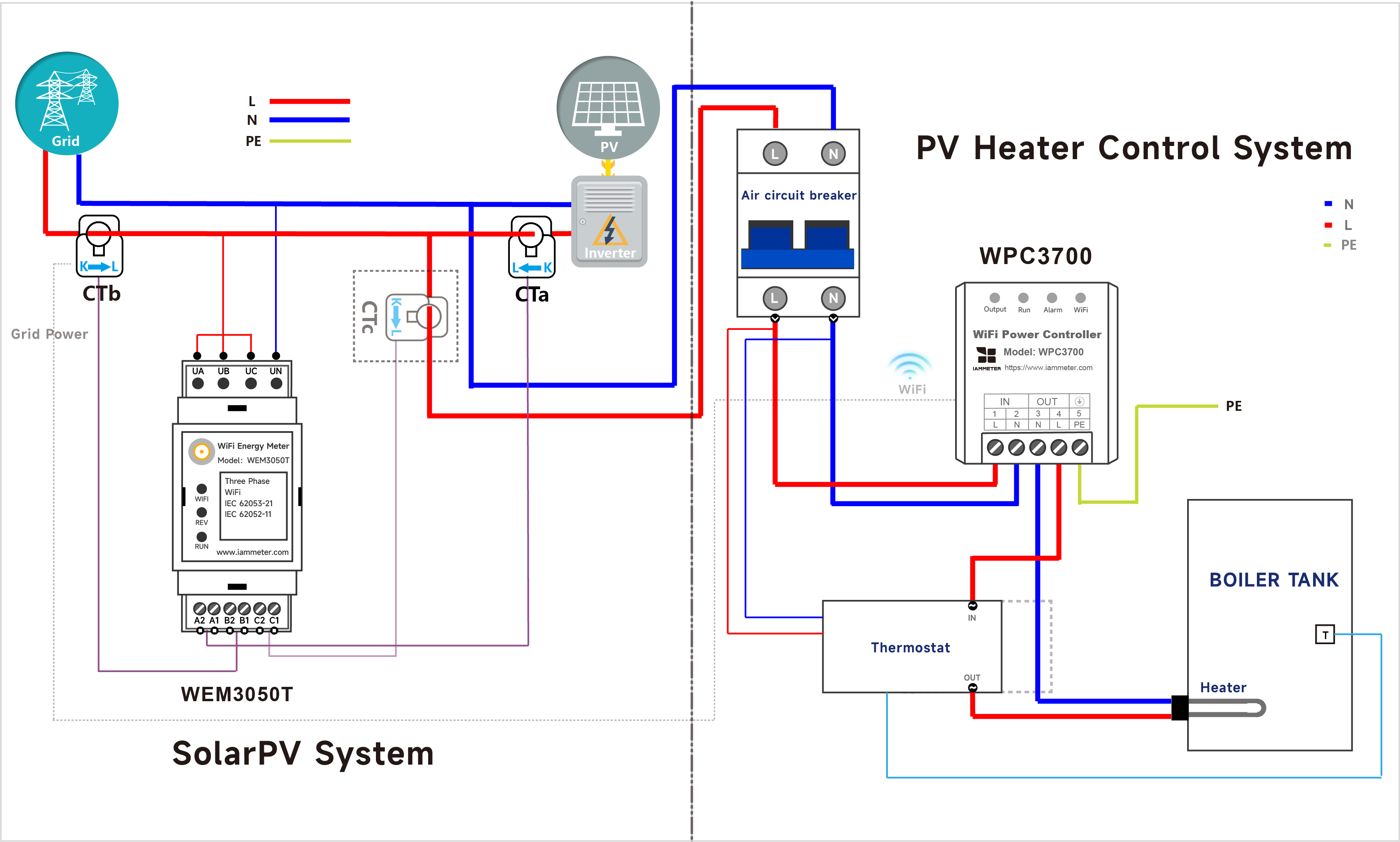
Recommended meters:
WPC3700 is designed for resistive loads.
Suitable examples:
Do not use WPC3700 to linearly control loads such as:
If you are not sure whether your load is suitable, confirm the load type before installation.
This is the recommended mode for solar surplus control.
WPC3700 works with an IAMMETER meter and adjusts the load power based on real-time grid import/export.
This is the complete IAMMETER solution:
Video:
WPC3700 can also work independently. Users can set output power from the app or by API.
This is useful when:
Reference:
Advanced users can integrate WPC3700 into platforms such as Home Assistant or Node-RED.
Possible use cases include:
Community examples:
Assume a home has:
Without WPC3700, the heater may still draw electricity from the grid whenever solar output is lower than the heater's rated power.
With WPC3700, the heater can run at a lower power level that matches available solar surplus. For example, if only 1.2 kW of surplus solar is available, WPC3700 can run the heater around that level instead of switching the full 3.5 kW load on and pulling power from the grid.
This is especially useful on cloudy days, when PV output changes frequently.
The result is higher self-consumption and lower grid electricity cost.
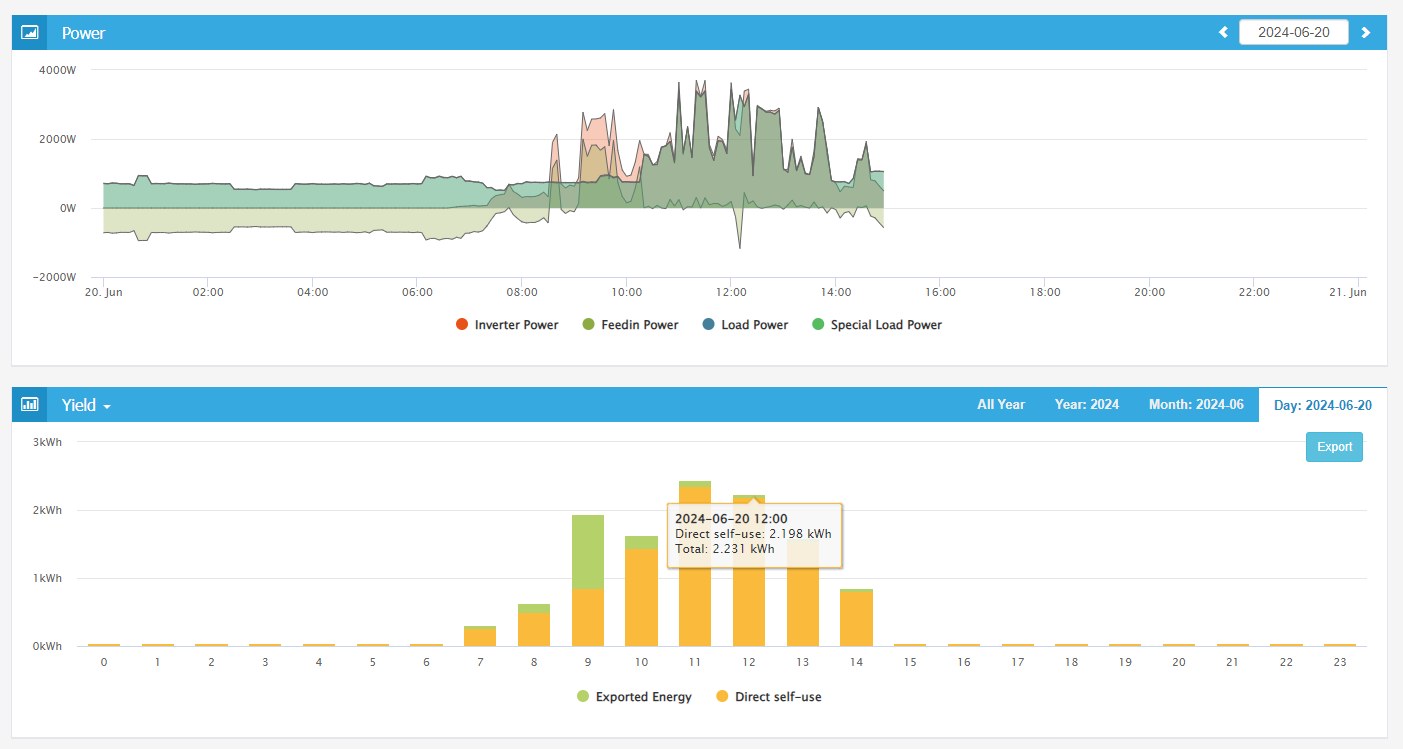
The following test shows the effect of using a Wi-Fi power controller for boiler heating based on solar surplus.
Original discussion:
Before using power control, surplus solar was still exported while the water heater could draw electricity from the grid at other times.
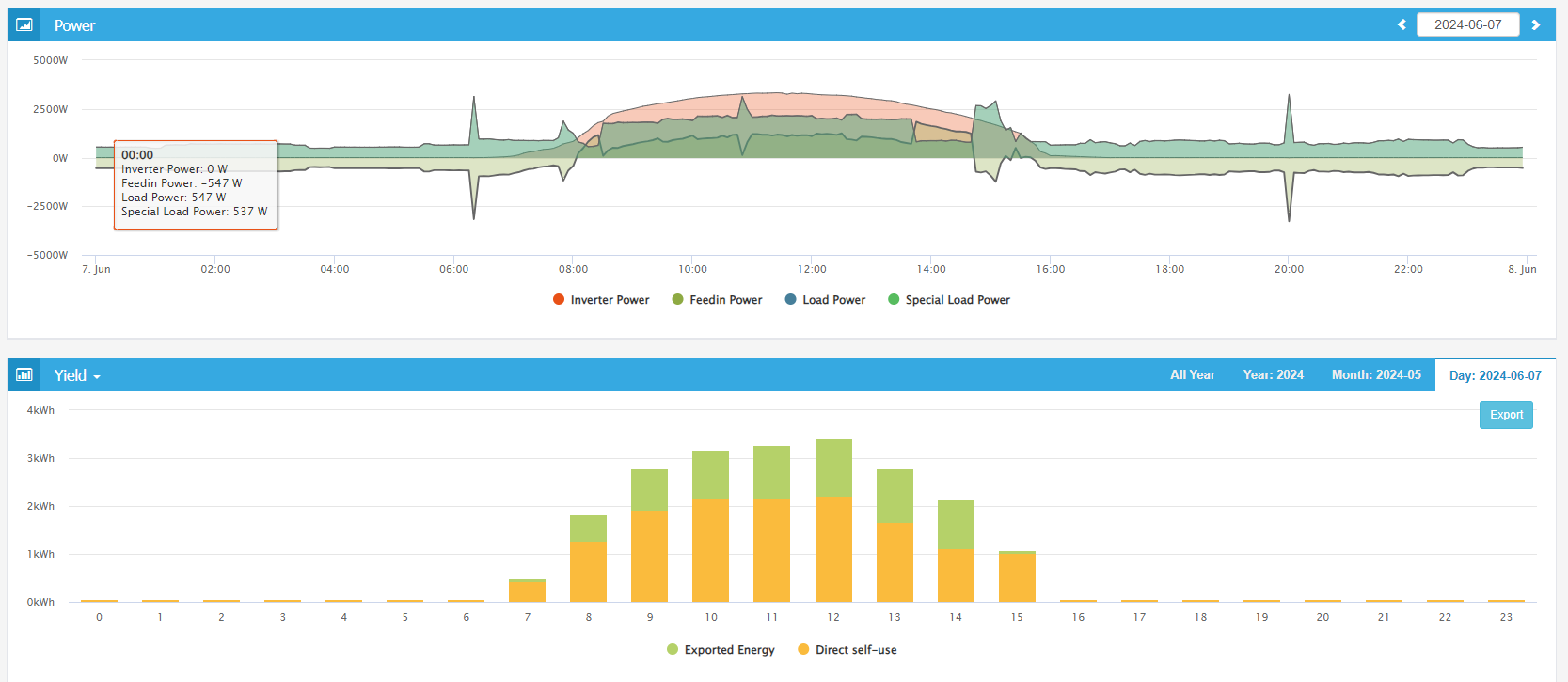
After introducing the controller, the heater power was adjusted according to grid power, allowing the water heater to use solar surplus more effectively.
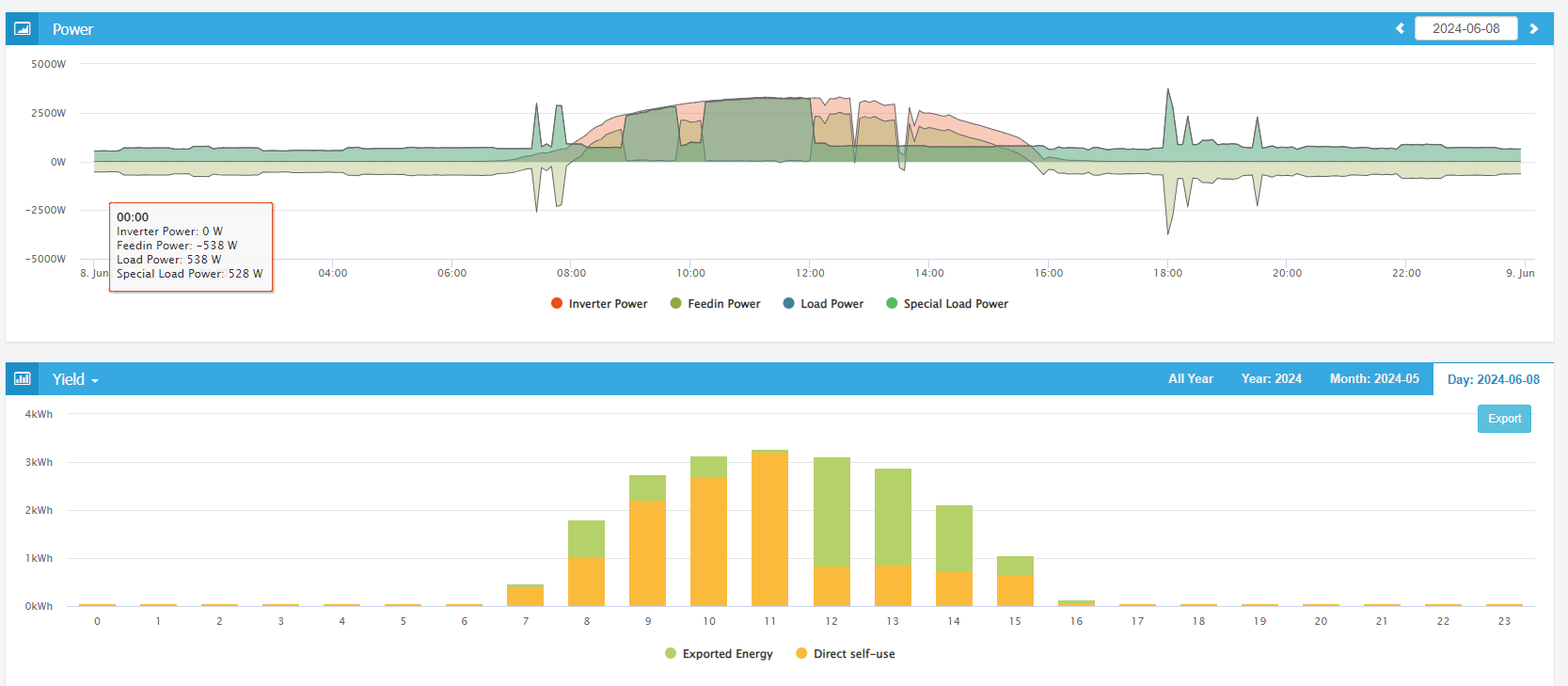
On cloudy days, the benefit can be more visible because the controller follows changing PV output instead of simply switching the heater on or off.
| Specification | WPC3700 |
|---|---|
| Device type | Single-phase Wi-Fi power controller |
| Load type | Resistive loads |
| Operating voltage | 240 V |
| Maximum control power | 3.7 kW |
| Control mode | Linear power control |
| Integration | IAMMETER meter, app, API, Home Assistant, Node-RED |
You can find available IAMMETER sales channels here:
Last updated on: Jul 03, 2026
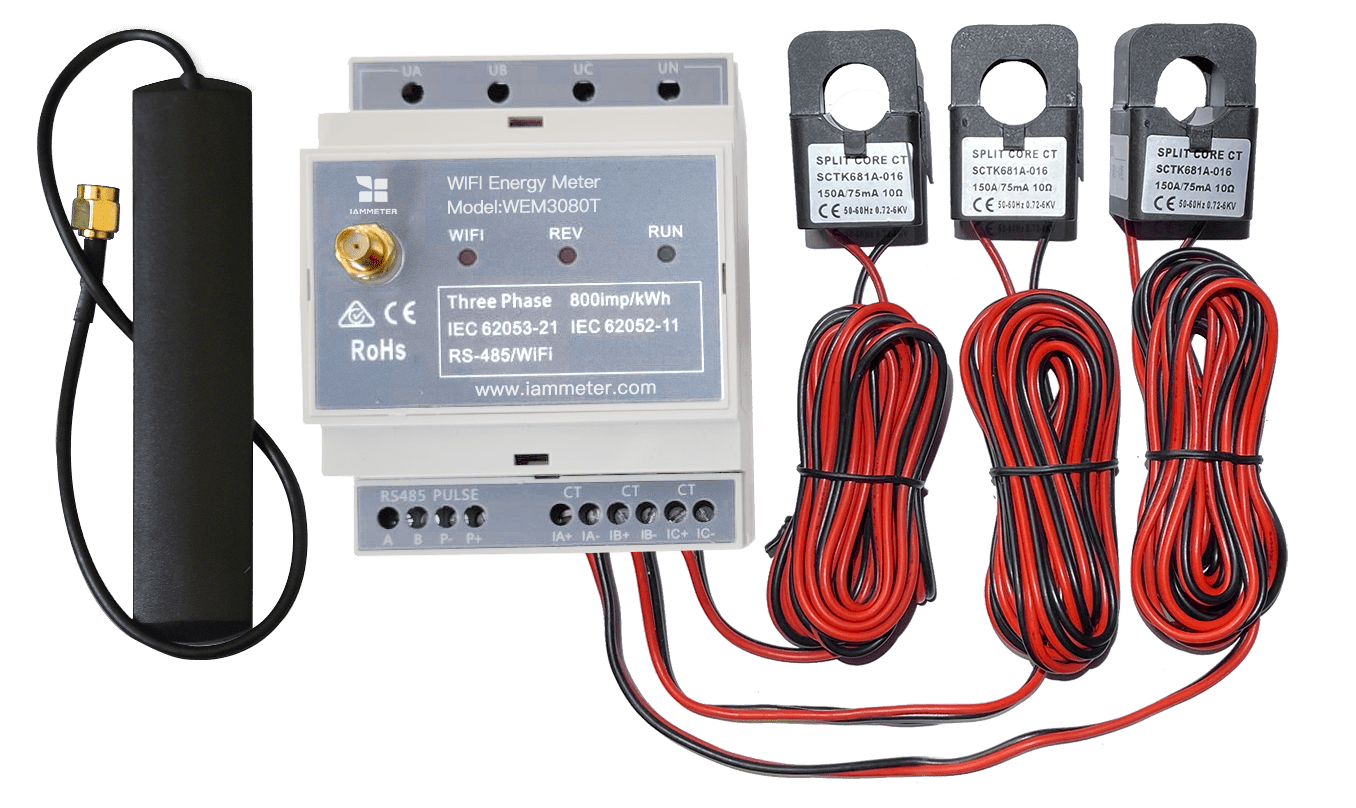
Three Phase Wi-Fi Energy Meter (WEM3080T)
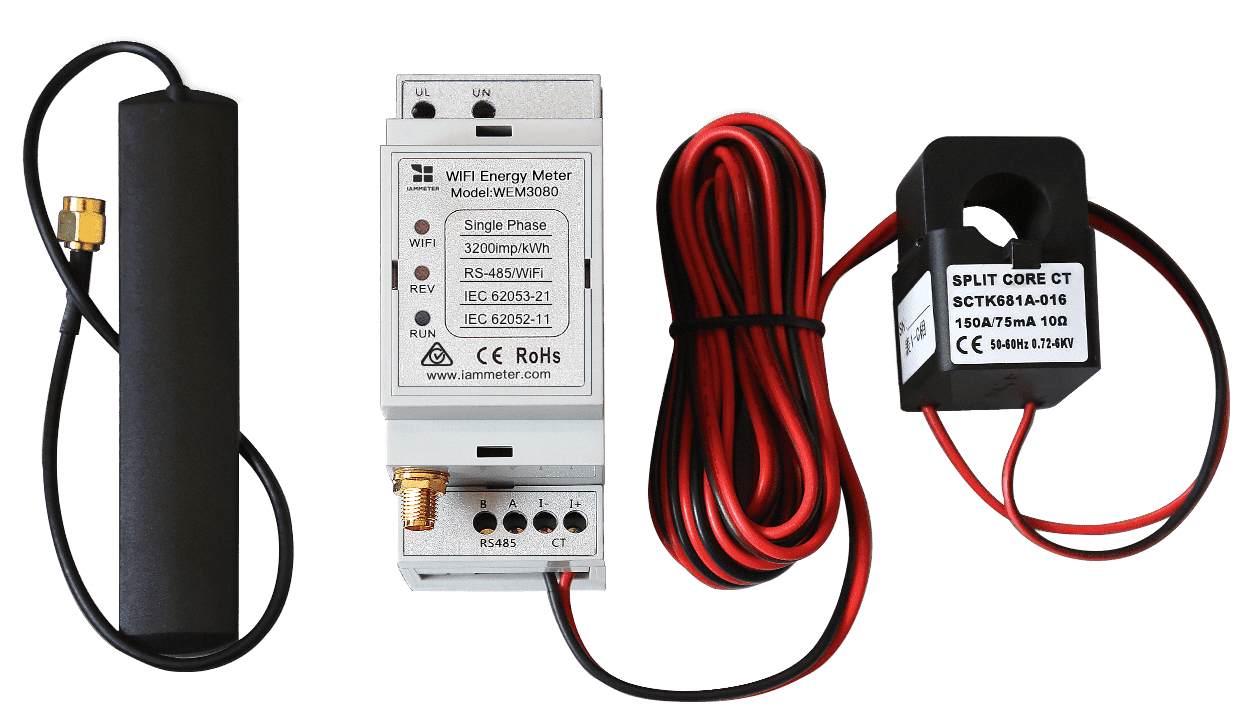
Single Phase Wi-Fi Energy Meter (WEM3080)
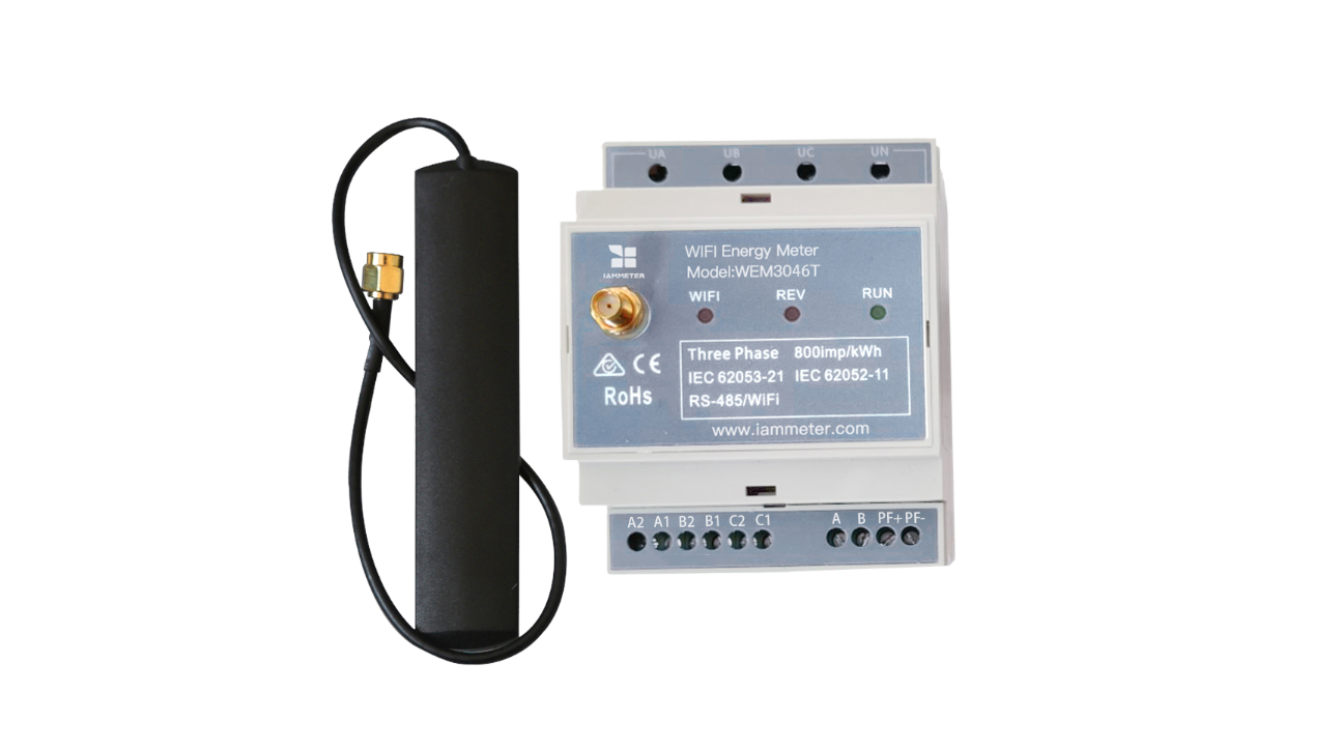
Three Phase Wi-Fi Energy Meter (WEM3046T)
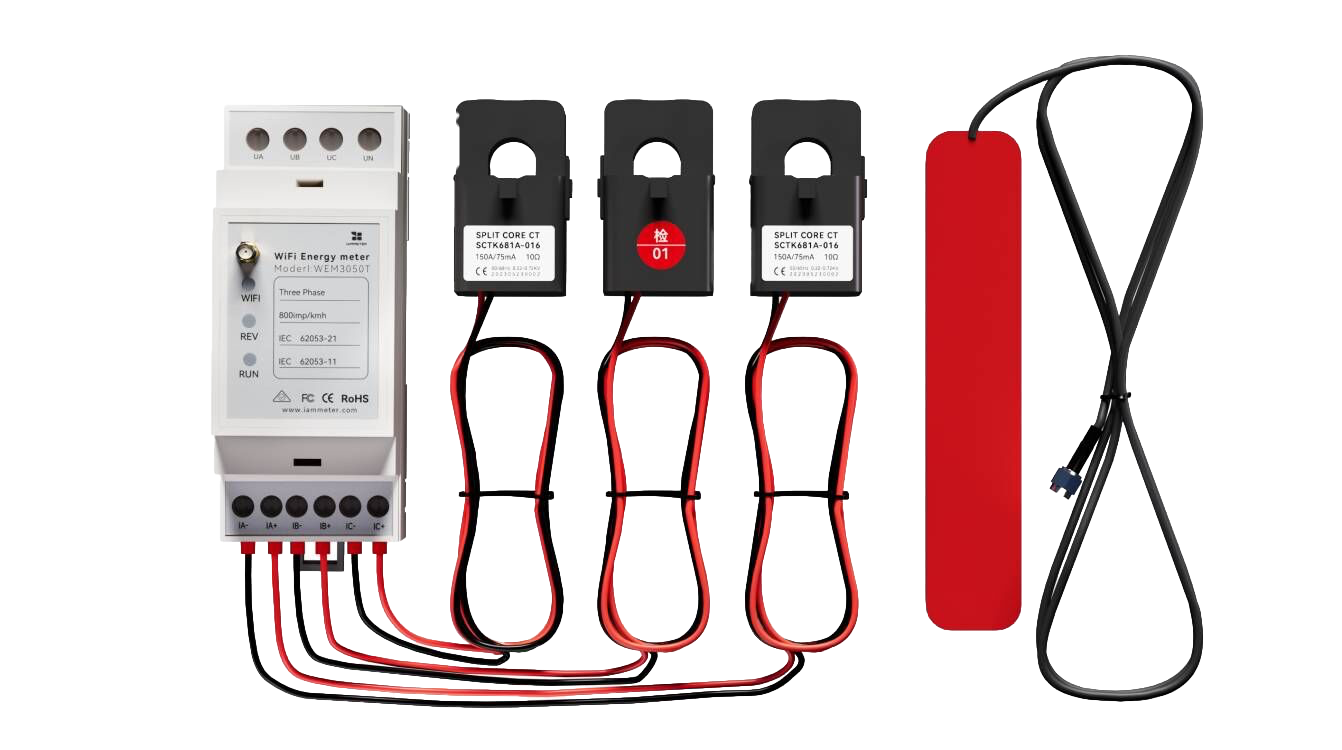
Three Phase Wi-Fi Energy Meter (WEM3050T)